南湖新闻网讯(通讯员 王嘉颖)近日,我校园艺林学学院、果蔬园艺作物种质创新与利用全国重点实验室番茄团队叶杰副教授课题组在国际学术期刊Plant Physiology在线发表题为“Natural variation and uORF engineering complementary routes to improve ascorbic acid accumulation in tomato”的研究论文。该研究结合自然变异挖掘与上游开放阅读框(uORF)精准编辑,系统解析了番茄抗坏血酸(AsA,即维生素C)积累的遗传调控基础,并提出了兼顾营养品质提升与农艺性状稳定的番茄维生素C改良新策略。
维生素C是植物重要的抗氧化物质,也是人体必需的微量营养素。番茄作为重要园艺作物和维生素C膳食来源,其果实维生素C含量直接影响营养品质。然而,在番茄驯化和改良过程中,果实维生素C含量呈下降趋势,优异遗传资源及可精准利用的调控靶点仍较为有限。
研究团队整合404份番茄种质资源的基因组、转录组和代谢物数据,对61个维生素C相关基因开展表达全基因组关联分析。结果表明,番茄维生素C代谢相关基因在驯化和改良过程中发生了显著的表达重塑,多个基因的表达受顺式和反式调控位点共同影响。
进一步研究发现,维生素C生物合成关键基因 GGP2 的自然变异与果实维生素C含量显著相关。高维生素C等位基因组合具有更高的调控活性和 GGP2 表达水平。研究团队据此开发了基于GGP2 InDel25位点的PCR分子标记,在96份自然种质中识别准确率达94.26%,可有效区分高、低维生素C等位基因,为番茄高维生素C种质筛选和亲本选配提供了实用工具。
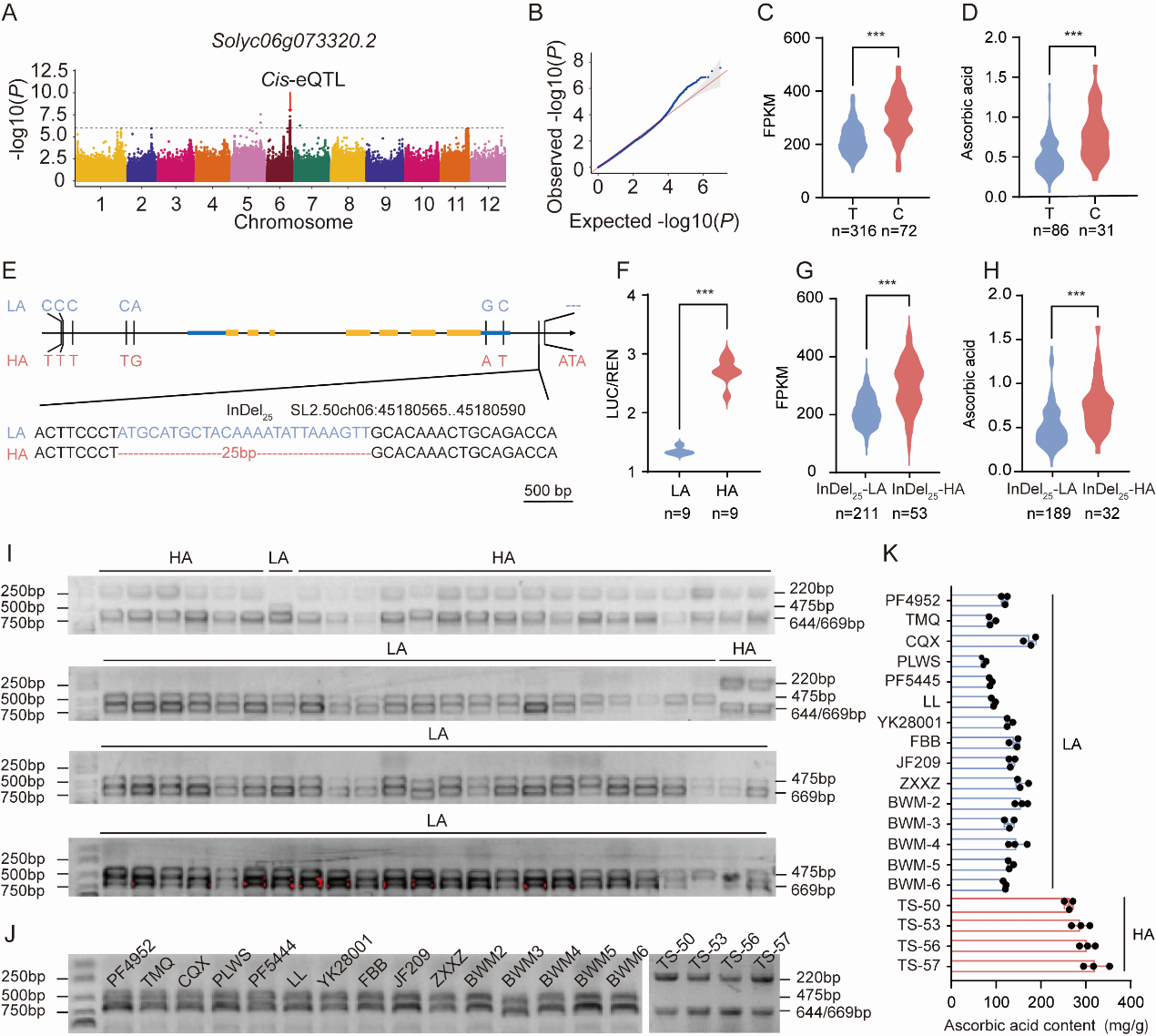
图1 基于GGP2等位基因变异的分子标记的开发
uORF 是位于基因5′非翻译区的顺式调控元件,通常会抑制下游编码区的翻译。研究团队利用CRISPR/Cas9技术,分别对维生素C合成途径关键基因 GGP1、GME2 和 GMP3 的uORF进行精准编辑。双荧光素酶实验和RT-qPCR分析表明,uORF编辑主要解除其对下游主开放阅读框翻译的抑制,而不显著改变基因转录水平。
在T1和T2代材料中,uORF编辑株系的果实和叶片总维生素C及还原型维生素C含量均显著高于野生型,其中部分株系果实总维生素C含量达到野生型的1.7倍。同时,在本研究的栽培条件下,编辑株系在植株生长、果实大小、单果重、坐果数和产量等主要农艺性状上均未观察到显著不利影响。转录分析进一步显示,uORF编辑仅引起维生素C代谢通路中少数基因的有限表达变化,表明该策略可通过精细调控内源基因翻译水平,实现营养品质提升。
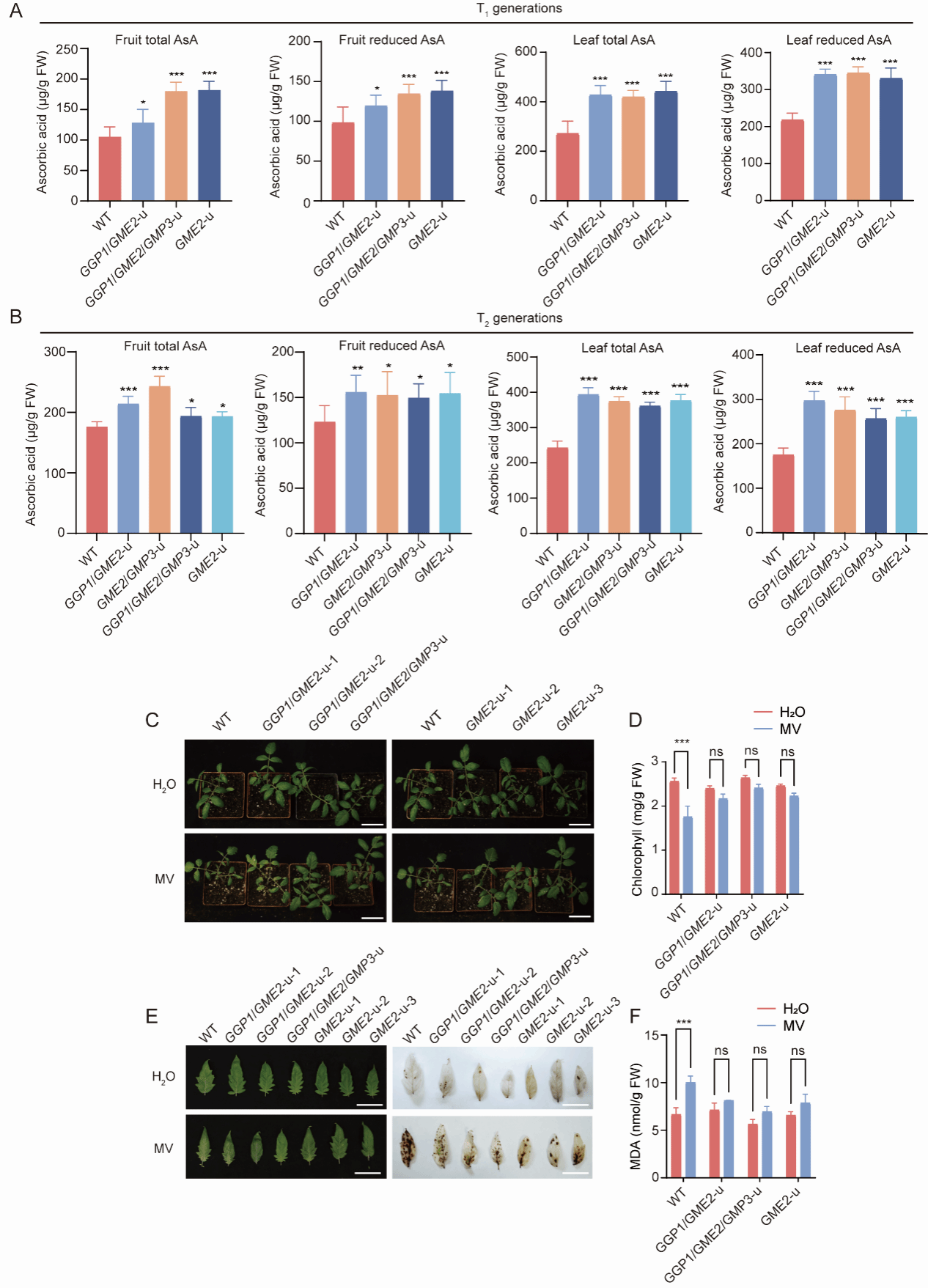
图2 上游开放阅读框(uORF)编辑可促进番茄抗坏血酸(AsA)的积累,同时增强其对氧化胁迫的耐受性
该研究提出了两条可互补的番茄维生素C改良路径:一是利用 GGP2 高维生素C自然等位基因开展分子辅助选择,二是通过uORF精准编辑增强关键合成基因的翻译效率。相关成果为番茄营养品质分子设计育种提供了新的遗传资源和技术思路。
华中农业大学园艺林学学院叶杰副教授为通讯作者,博士生王嘉颖、硕士生谢紫妍为论文共同第一作者;华中农业大学叶志彪教授、张俊红教授、张余洋教授和王涛涛教授对实验和论文提供了重要指导。该研究得到国家重点研发计划、国家自然科学基金、中央高校基本科研业务费和国家现代农业产业技术体系等项目资助。
论文链接:https://academic.oup.com/plphys/article-abstract/201/4/kiag583/8772024
英文摘要:Ascorbic acid (AsA) determines fruit nutritional quality and antioxidant capacity in tomato, but available genetic resources for its improvement are limited. Here, we integrated natural variation analysis with upstream open reading frames (uORFs) editing to identify and engineer determinants of AsA accumulation. A natural variant in GGP2 was significantly associated with fruit AsA content, leading to the development of a diagnostic molecular marker for allele discrimination. Targeted editing of uORFs in 3 AsA biosynthetic genes, GGP1, GME2, and GMP3, enhanced translation of their main ORFs without altering transcript abundance, as confirmed by dual-luciferase assays and RT-qPCR. In both T1 and T2 generations, uORF-edited lines accumulated significantly higher levels of total and reduced AsA in fruits and leaves than wild type. The edited lines also showed improved tolerance to methyl viologen-induced oxidative stress, with reduced chlorosis, higher chlorophyll retention, lower reactive oxygen species accumulation and decreased malondialdehyde content. Notably, uORF editing caused only minimal transcriptional perturbation of the broader AsA pathway and no detectable penalties in plant growth, fruit development, or yield. Collectively, our results demonstrate that both natural allelic variation in GGP2 and engineered uORF editing of key biosynthetic genes can effectively enhance tomato AsA content, establishing uORF editing as a promising strategy for nutritional quality improvement with few agronomic trade-offs.




 最近新闻
最近新闻